Tag Archives: writing

Time: is it a sandwich?

My 13 y.o. waxed somewhat rhapsodic on our ride home from his cello lesson last week. What if time didn’t matter, he said. What if everything is happening all at once, and time doesn’t move forward like we think it does but instead is a big thick layer (a Dagwood sandwich sprang to my mind) and time travel wouldn’t take us forward or backward but just to the other layers that we’re in.

I’m not sure where he gets these ideas, tho’ it’s a good bet that his leave-no-crumbs wolf-down consumption of nonfiction helps. And Engineer Hubby hooks up podcasts about science on road trips and that helps, too. But I never, and I mean NEVER, thought about what time might be like when I was a child. I never think about it now. Except when he’s talking and then my little mind gets blown.

I think about people and why they do what they do and what would happen if they did something else and how could someone get away with shoplifting or embezzling or murder and how hard it would be to go into hiding from the mafia, and alternative outcomes for country song story lines. Usually all of these jumble together in my brain while I shower.

There are plenty of theories and studies about creativity; environment certainly has a lot to do with it, and being supported by someone who cares about you is also important (I have an informal theory that every artist has had at least one teacher who said YES! to whatever they tried) but ultimately: we are unique collections of molecules. And the organization of those molecules into the human form, the human brain, follows a regular DNA pattern book, a pattern book with a lot of variations but not an infinite number of combinations. Why do some of our pattern books lead us to think about time instead of about people? Or is the we-are-molecules-and-an-electrical-system concept too limiting, failing as it does to account for the soul, or spirit?

It has taken me most of my adult life to glom onto the fact that others are Different From Me. Profoundly, completely different. That not everyone cleans their dishes before going to bed. Or washes their sheets once a week. These dish-in-sink, clean-sheet-slackers appear to be happy, healthy, content.
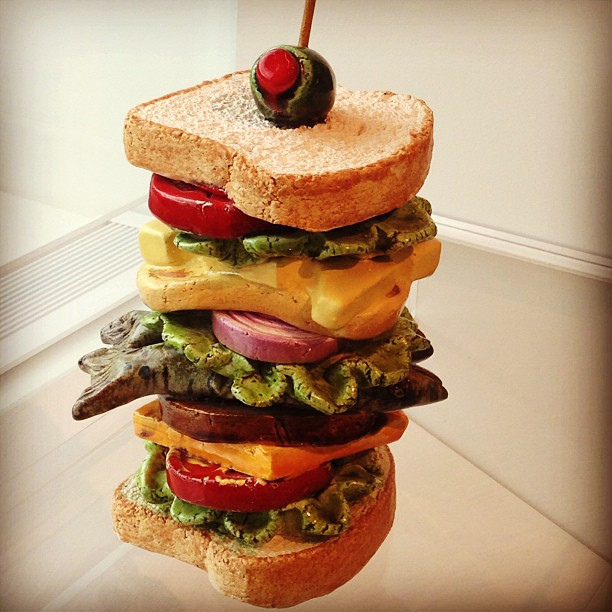
Photo by Mickey Destro

Photo by Mickey Destro

These days, as I do said dishes and load aforementioned sheets into the washer, I find myself thinking: Andrea Barrett doesn’t do this. Lionel Shriver doesn’t spend this much time on domestic duties. Writers must write which means dust bunnies will be free to frolic and breed. Maybe, just maybe, if I imagine hard enough and write long enough, I’ll be able to release my inner dirty-dish-lover, and she in turn will surprise me by creating that which I cannot yet imagine: a sandwich of words, comprised of pastrami particles and swiss cheese holes and mustardy molecules, the crumbs left for the ants.

Fear and salvation

Unknown-1I am heading to a week’s training in the Amherst Writers and Artists writing workshop method. Aka the Pat Schneider workshop method.  We’ll be working with Schneider’s book Writing Alone and with Others. I cannot recommend this highly enough! Buy it today if you can! The “Five Essential Affirmations” she articulates in this text resonate deeply with me:

1. Everyone has a strong, unique voice.

2. Everyone is born with creative genius.

3. Writing as an art form belongs to all people, regardless of economic class or educational level.

4. The teaching of craft can be done without damage to a writers original voice or artistic self-esteem.

5. A writer is someone who writes.

Ah. That last one. A writer is someone who writes.

I am afraid I have not been writing. I have been fussing with stuff in my house, liberating books and tchotchkes to create a clear writing space.

I have not been writing.  I have been telling myself everything else is more important than my writing: the college visits for the older son, the dog walks, the volunteer work for my faith community, the exercise to whittle the extra five pounds from my belly.

I have not been writing for a couple of months, since I gave a very rough (as in, splintery!) draft of a story to a writers group without a clear request for the type of feedback that would be most supportive for my writing.

Unsurprisingly, the feedback was uneven; there were positive and negative responses. Somewhat surprisingly, the less-than-positive responses really got under my skin. I ranted and raged and cried and whimpered my way through Julia Cameron‘s recommended three longhand “Morning Pages” for a couple of weeks. Then for another couple of weeks I donned the TaskMasterLesley hat in my Morning Pages: you know full well how to handle this! Buck up! But I can’t, I whined, scrawling my heart’s distress across the pages. I just can’t write anymore. I’m dried up. I’m barren. I’m a wasteland.

You can imagine the gaping abyss of terror that my squirrel brain has come up with. In fact, if you’ve read any of my previous posts, you are probably overly familiar with my squirrel brain.

But this morning, seven weeks since that critique, my Morning Pages delivered me to a new place. My squirrel brain … bored me. When it started its high-pitched chatter, today I simply noted: h’mm, there’s that squirrel, desperate for nuts. And I strode forward past the tree it perched in. I did not engage in a loud chattery chirrupy shouting match while flicking my tail in wild anxiety and circling the tree trunk like a maniac.

Creative Commons


I wound up in a clearing wherein I laid out a plan for how to find the sandpaper to begin to smooth my story’s splinters. And furthermore, the Morning Pages said, look at how much you’ve written! You’ve written your Morning Pages every day. It’s whiney writing, non-brilliant writing, repetitive writing, prosaic writing.

But it’s writing.

Saved again.


Do you hear what I hear?

Our two dogs are of varying intelligence and thus responsiveness to our commands. One “off” moves the smart gal from my lap, while the oh-so-lovable-but-slow canine continues to warm my thighs until dumped to the ground.

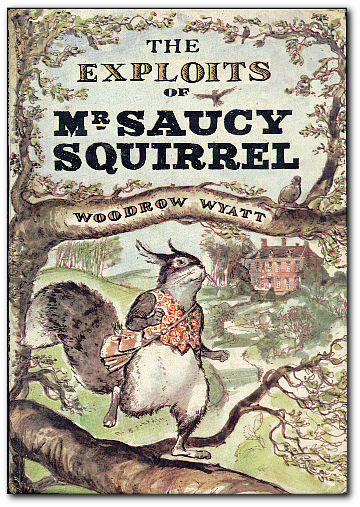
Their barking has become annoying:  yapYAPyapYAP until the source of  inspiration either disappears from view (other dogs out for a walk, meandering cat, saucy squirrel) or has been thoroughly sniffed (friends who come to the door). Our lovely neighbors, cyclists who pedal up and down the Virginia mountains for dozens of miles, suggested using their “dazzer” to control the barking.

The Dazzer emits an unpleasant sound, audible only in the doggie range. One zap and the smart dog understood and now ceases barking promptly when told, “no bark.” The other dog continues to bark despite the command — and will do so until the Dazzer is used. Which of course is unfair to the dog that was already quiet.

And, as it turns out, also a bit unfair to my younger son, whose youthful ears register the Dazzer. “Don’t you hear that little squeak when you press the button, mom?”

No, I do not. I barely hear Engineer Hubby when he asks me to pass the cream for the coffee. I know I’m not hearing the whining about soup and sandwiches for dinner again, right?

imagesSo yet again I discover the very real limits of my (aging) human senses, and, all kidding aside, am momentarily quieted. I wasn’t in awe of the 13 y.o.’s hearing, but it was in the neighborhood (see I know nothing for a dog-taught lesson in humility). I was awe-struck last Sunday when, twenty yards into the woods, both dogs sniffed snuffled snorted snurkled the leaves — speckled with bird poop, huh, look at that, my dull human brain noted — and then both mutts looked straight up and above us turkey vultures were circling, settling on branches, all with their wide, whispery wings. I know they’re carrion feeders and their heads are weirdly bald-looking but still: they are awe-some.

Then I read about the the concept of rewilding — as articulated by George Monbiot in this interview in the fine magazine Orion. He notes that humans are perhaps the most domesticated of all animals, living out our days in relative comfort despite having been designed to survive in a world bloody in fang and claw. We do not often experience the heart-stopping awe that is ours when we wade into the world sans civilized expectations and protections.

I don’t disagree, and/but I when I pause to look at my now-almost-six-foot son, who started as a mere eight pounds; when I see my Grandfather’s wild hair atop my younger son’s head; when I notice EH’s eyes look like his father’s, then I am momentarily awed.

These small details are invisible in the scope of things (the new Cosmos illustrated this for me: I had no idea we (think) we know as much as we do about the universe. The Local Group?) We are, relatively speaking, so very very very tiny. Eensy-weensy. How awe-some is that?

As I near fifty years old* (fifty years! A microscopic pinhead of days in the universe!), I find it easier to remind myself to switch from the daily-annoyances-perspective to the holy-cow-isn’t-this-amazing-perspective, especially when the dogs are pointing out the limits of my nervous system or the scientists my lack of knowledge. (Full disclosure: my family will disagree that I *ever* switch out of annoyed mode, as I nag them nigh unto death about putting away dishes, clothes, shoes, homework, etcetera.)

NASA photo

NASA photo

But what a wonder! What a happenstance to be alive in this time (whenever it may be), in this place (wherever it may be), with this consciousness (however it may be limited by no-dog-nose capacities).

All I can do is write it down. Badly, baldly, awe-struck-ed-ly, make-up-words-ily. What a ride. Buckle up and look to the heavens and tell us what you see.

* This post dovetails nicely with WordPress’s weekly writing challenge, about “The Golden Years” at their site, The Daily Post